
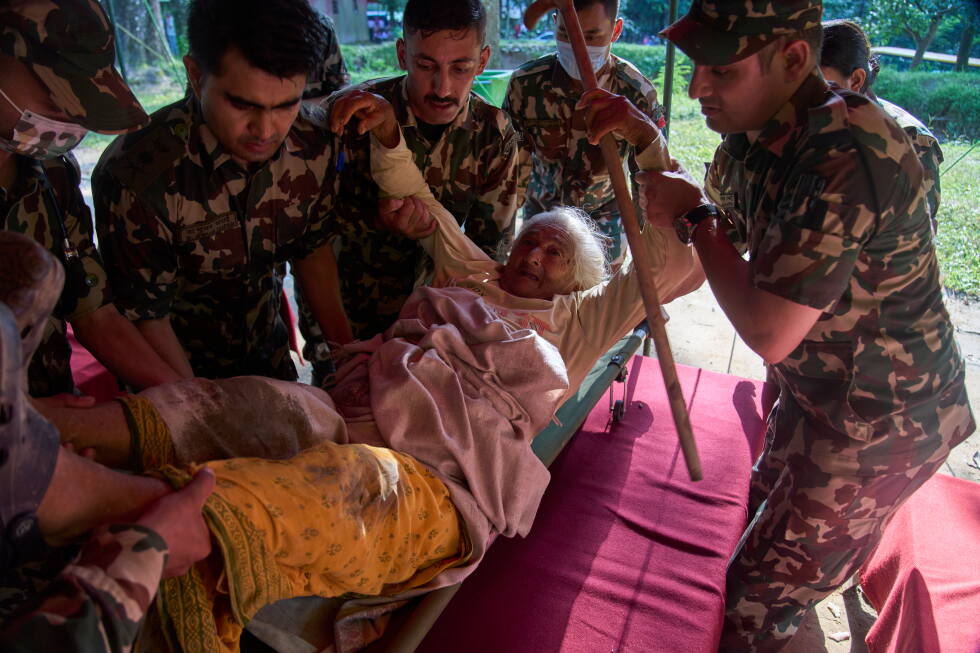
The search for survivors continues along the rugged border of Nepal and China where a devastating flash flood has left a trail of destruction and an ever growing list of casualties. Nepali officials confirmed Friday that the death toll within their borders has climbed to 469, while Chinese authorities have reported three deaths in Tibet. With more than 1,500 people still missing, including international trekkers and pilgrims, rescue teams are working against time to locate victims buried beneath layers of thick mud and debris.
Adding to the desperation is a looming secondary threat from upstream. Authorities warn that a massive lake, formed spontaneously during the initial disaster, is already overflowing and could trigger another wave of flooding. According to China’s Ministry of Water Resources, the lake currently holds roughly 2 million cubic meters of water and is expected to swell further over the coming days. Because the body of water sits nearly 1,000 meters above Gyirong Port, a key border crossing already ravaged by the first surge, thousands of residents in low lying areas have been urged to evacuate immediately.
On the ground, the scene is one of total devastation. Videos captured during the event show towering walls of water sweeping away sturdy buildings and bridges as if they were toys. In some areas, rescuers face grueling challenges such as at the Upper Trishuli-1 Hydropower Project, where soldiers are struggling to find entrance points into tunnels believed to be trapping workers under mountains of sludge. To date, over 3,000 people have been airlifted out of the danger zone via helicopter and transported to hospitals in Kathmandu for emergency care.
While families across the globe grapple with loss and uncertainty, scientists believe the catastrophe began when bedrock beneath a high altitude glacier collapsed. This collapse likely triggered a massive release of rock and meltwater that surged through valley rivers with irresistible force. As global leaders offer aid and support, local recovery efforts remain focused on the immediate goal of extracting survivors before any further collapses occur from the unstable terrain above.