
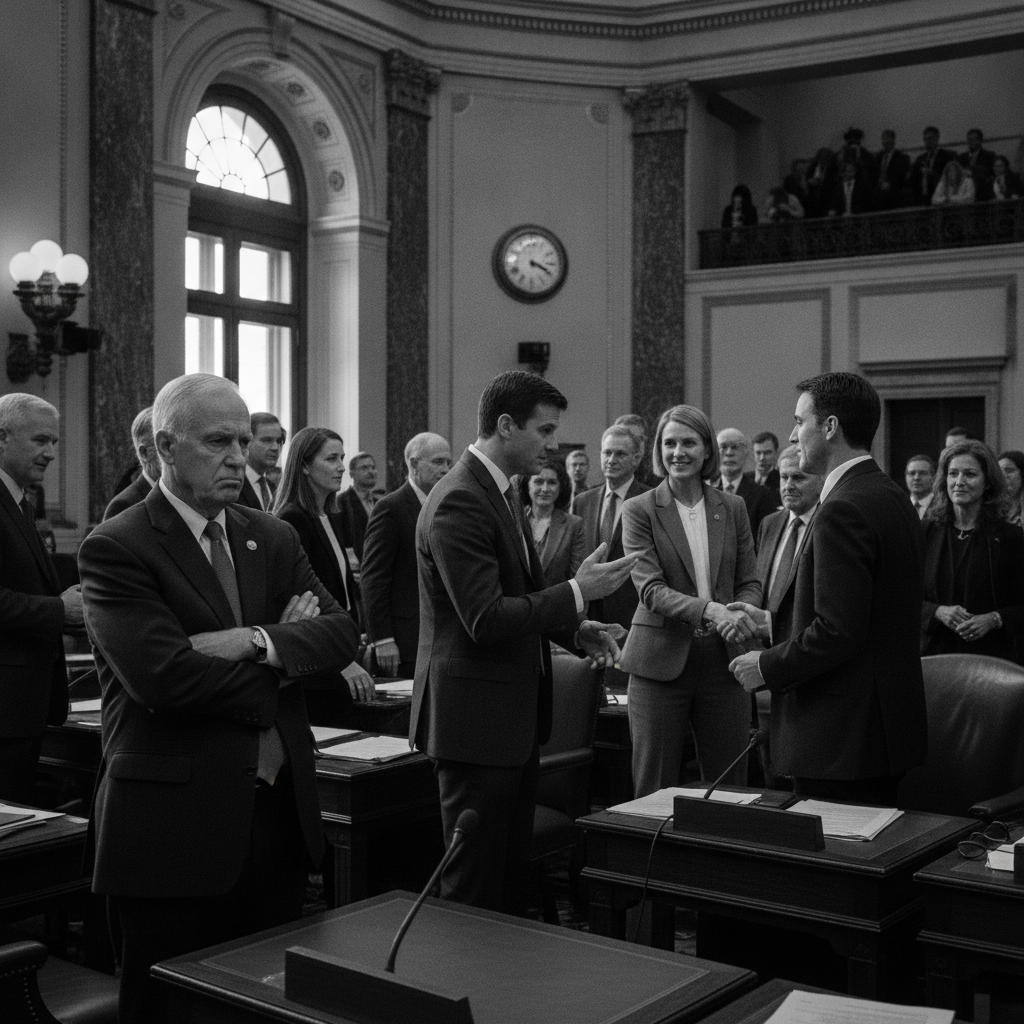
The United States Senate blocked a Republican led effort to restrict stock trading by members of Congress on Wednesday, falling seven votes short of the threshold required to even begin a formal debate. In a party line divide, every Democrat and independent voted against the Stop Insider Trading Act, which had previously cleared the House in July. Coming just five weeks before the November midterm elections, the collapse of the bill highlights a deep partisan rift over how to handle perceived conflicts of interest within the halls of power.
Democrats argued that the proposed legislation was fundamentally flawed, describing it as a permission slip for corruption rather than a genuine reform. They contended that because the bill allowed lawmakers to maintain their existing portfolios and reinvest dividends, it essentially left loopholes wide open. Furthermore, Democratic leaders like Chuck Schumer claimed the measure was intentionally sabotaged by being bundled with strict voter ID requirements, which they labeled a poison pill designed to distract from the core issue and obstruct any real progress toward ethics reform.
Republicans reacted with indignation, accusing their colleagues across the aisle of protecting a corrupt system often referred to as the swamp. Senator Pete Ricketts emphasized the urgent need to restore public faith in government institutions, while Republican National Committee Chair Joe Gruters suggested that voters should be the ones to hold Democrats accountable at the polls next month. This clash follows years of stalled attempts to curb congressional trading, including various iterations of bills targeting high profile figures like Nancy Pelosi or attempting to expand restrictions to include presidenital officials.
The debate arrives amid staggering data regarding financial activity in Washington and beyond. Recent disclosures sparked controversy when reports surfaced detailing thousands of trades linked to Donald Trump during his time in office, volumes that some legislators described as unprecedented for a sitting president. While there has been no evidence produced showing illegal insider trading, watchdog groups continue to point toward millions of dollars in trades made by members of both parties as proof that current laws are insufficient. As the Senate adjourns for the remainder of the campaign season, these unresolved tensions remain a central talking point for candidates seeking to prove their integrity to an increasingly skeptical electorate.