
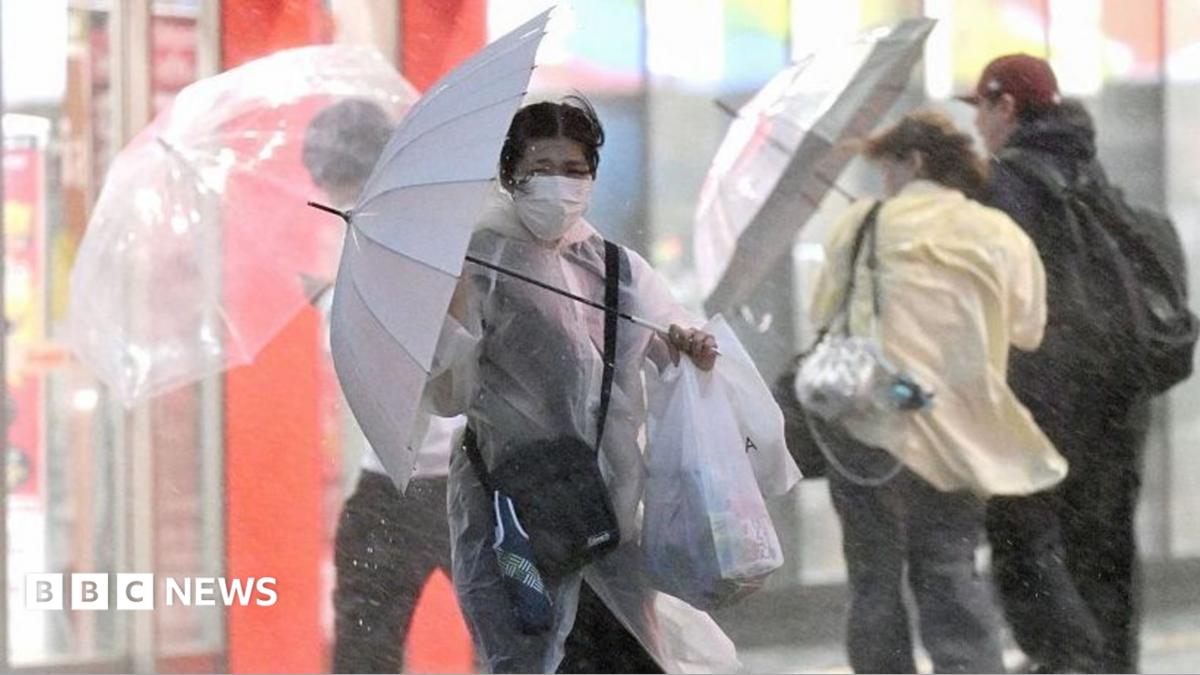
Japan faced a chaotic start to its Silver Week holidays as Typhoon Dujuan barreled along the east coast, prompting authorities to issue evacuation warnings for nearly two million people across six prefectures. While the storm never made official landfall, its outer bands unleashed devastating rains and violent winds that shattered precipitation records in at least eight different cities. The impact was felt most acutely in Chiba prefecture, where some areas saw staggering amounts of rainfall, leaving thousands of homes without electricity and grounding nearly 400 flights on Monday alone.
The human toll began to emerge as emergency crews battled treacherous conditions. Fire departments reported that a woman in her 60s may have been swept away by a landslide in Kanagawa prefecture, while rescuers spent three grueling hours pulling a man from beneath debris in Chiba before rushing him to the hospital. Beyond the immediate casualties, the timing of the storm created significant logistical headaches for those celebrating the national holidays and organizers preparing for the upcoming Asian Games in Aichi prefecture.
Meteorological data highlighted the sheer scale of the deluge, with several locations reporting over 300 millimeters of rain within a single twenty four hour window. Some regions experienced extreme surges, including Oshima Town which recorded a massive 800 millimeters of rain over two days. These saturated soils triggered high level landslide warnings across the Izu islands and southeastern Honshu, forcing residents to remain vigilant against flash floods and tornadoes even as the center of the storm remained offshore.
As night fell over Tokyo and surrounding regions, officials began downgrading alert levels after wind speeds dropped and the system started tracking northeastward away from land. Despite the easing rain, government agencies warned that the true extent of the destruction would not be fully understood until daylight revealed how many roads were blocked or buildings damaged. For now, Japan begins a slow process of recovery after surviving its twenty fifth typhoon of an unusually active season.