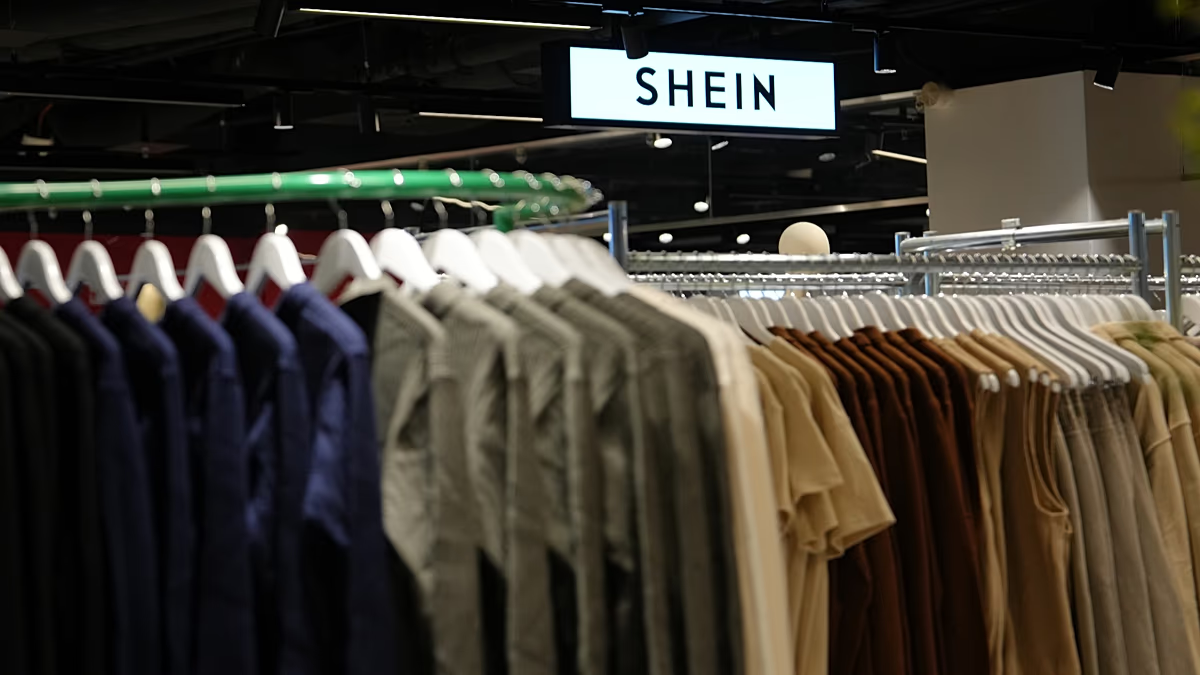
The dizzying rise of Shein, the titan of ultra-fast fashion, has hit a sobering wall. After failing to secure public listings in London and New York due to mounting concerns over its ethics and environmental footprint, the company eventually pivoted to the Hong Kong Stock Exchange. While a valuation of 27 billion dollars might sound impressive on paper, it represents a staggering seventy percent crash from its private market peak of nearly 100 billion dollars seen in 2022. This collapse suggests that the appetite for hyper-growth at any cost is waning among serious investors.
Industry experts argue that this isn’t just about morality but about material financial risk. For years, Shein built an empire by using fragmented, outsourced supply chains to keep prices impossibly low while distancing itself from the liabilities of production. However, this strategy has created a dangerous structural vulnerability. From reports of workers pulling seventy five hour weeks in violation of Chinese labor laws to admissions of child labor within its network, the company’s reliance on gray regulatory zones has turned ethical lapses into equity risks. Investors are beginning to realize that a brand plagued by human rights scandals is a volatile asset.
Environmental warnings have further soured the mood. Recent investigations by Greenpeace revealed that many Shein garments contain hazardous chemicals and forever chemicals exceeding European Union limits, some even appearing in children’s clothing. Despite pledges to improve chemical management, subsequent tests showed little progress. This pattern reinforces the belief that Shein’s business model—which involves flooding the market with thousands of new styles every single day—is fundamentally incompatible with sustainability.
Ultimately, Shein’s struggle to go public highlights a watershed moment for the entire fast fashion industry. The notion that tech driven efficiency can offset the physical toll on laborers and the planet is being challenged in the boardroom rather than just by activists. As long as cheap prices are subsidized by systemic exploitation and toxic materials, analysts suggest that companies like Shein will continue to face a steep discount from capital markets that now view social governance as a core component of long term value.