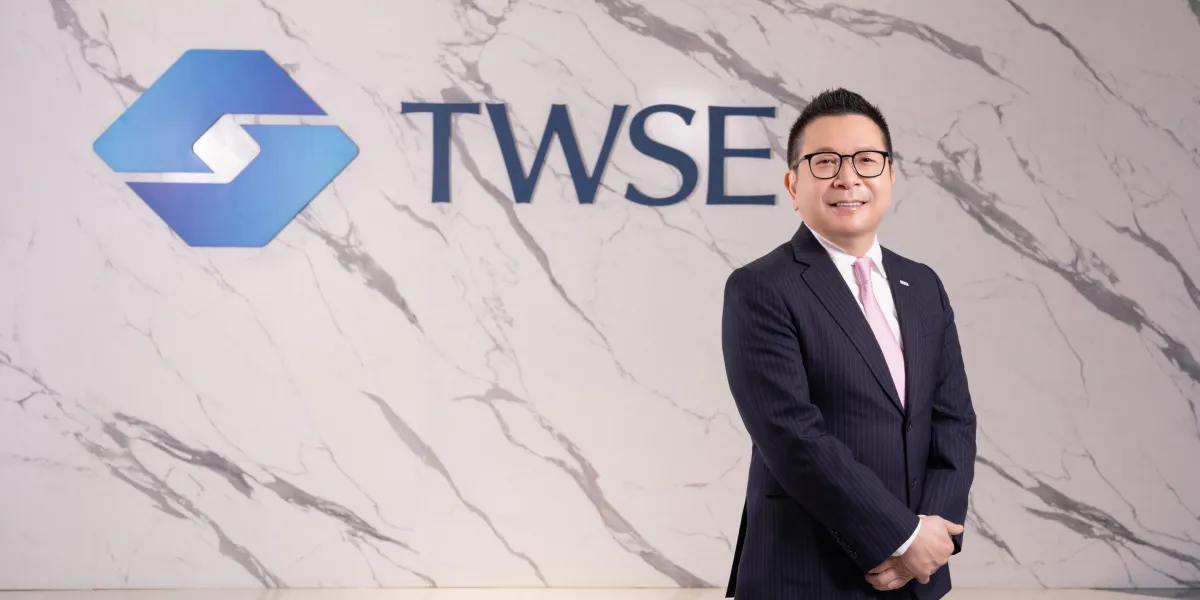
Sherman Lin, the chair of the Taiwan Stock Exchange Corporation, is facing a unique problem common to many successful nations but rare in its intensity. While Taiwan recently climbed to become the world’s fifth largest stock market, nearly forty percent of that valuation rests on the shoulders of a single entity, TSMC. To many investors, TSMC is the sacred mountain of the island’s economy, providing a massive shield of stability and growth. However, Lin believes that viewing Taiwan solely through the lens of one semiconductor giant ignores the true engine driving the country forward.
For Lin, the real story is not just one company but what he describes as a technology island. He envisions Taiwan as a sprawling, high tech industrial park where thousands of firms collaborate in an agile supply chain stretching from Taipei down to Kaohsiung. By positioning the island as a comprehensive AI ecosystem rather than a collection of isolated businesses, Lin hopes to attract foreign capital toward hidden champions and smaller players who provide the essential picks and shovels for the artificial intelligence revolution. Some analysts note that several of these smaller companies have actually outperformed TSMC over the last three years, suggesting there is significant untapped value beneath the surface.
To move beyond this reliance on big tech giants, the exchange has introduced initiatives like the Taiwan Innovation Board and the Taiwan Pristine Stock Index. These efforts aim to diversify investor interest into fields such as biotechnology and green energy while highlighting emerging startups in priority sectors. Early results are promising, with some innovation board shares surging significantly this year amid a record wave of initial public offerings driven by AI supply chain firms. This strategy aims to pivot global attention away from just one ticker symbol and toward a broader portfolio of regional expertise.
Beyond diversifying sectors, Taiwan is looking inward at how its companies communicate with shareholders. Through a new initiative called Power Up, Lin is pushing for better corporate governance and more transparent disclosures to bridge information gaps between executives and international investors. This mirrors recent reforms in Japan and South Korea that helped revitalize their respective markets by improving transparency and shareholder returns. With eyes set on expanding reach into Western markets and exploring opportunities in India and the Middle East, Lin is betting that showing off Taiwan’s collective DNA will prove more sustainable than relying on any single icon.